EN
EN

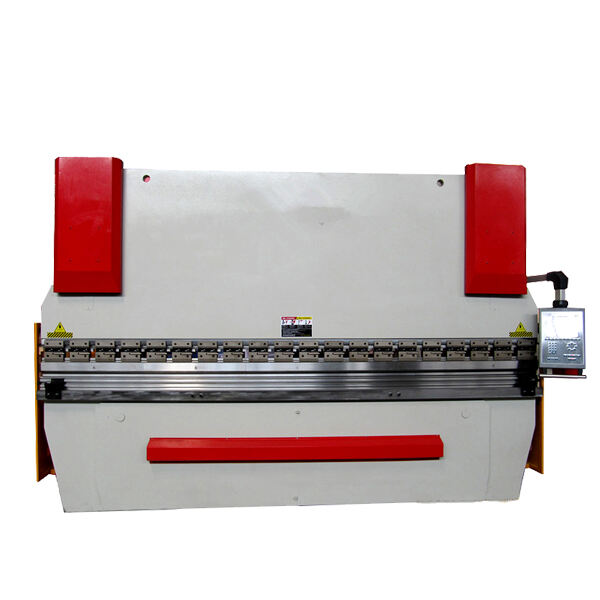
Real-Time Angle Measurement and Closed-Loop Control for Precision Bending
The Need for Instant Feedback in High-Precision Press Brake Operations
Today's press brake machines need constant feedback to handle changes in how thick materials are, their strength when pulled apart, and the direction of the grain inside them. For precision work in places like airplane manufacturing, old fashioned guesswork approaches waste around 15% of materials whenever angles go off track by more than half a degree either way, which usually means expensive fixes later on according to recent studies in manufacturing processes. These new closed loop systems take away all that guesswork by making adjustments to where the ram goes and how much pressure is applied throughout every bend, so parts come out right the first time without needing second attempts.
How Real-Time Angle Sensors and Laser Systems Improve Accuracy
Systems using laser technology like the LaserCheck bending angle measurement shine multiple light spots on both the workpiece and die, gathering 3D position information roughly every 20 milliseconds. What this means is real time adjustments happen when springback occurs during bends, tools automatically compensate when they deflect from pressure, and any warping materials get spotted even at pretty fast speeds over 12 meters per second. According to research from outside sources, these laser systems cut down angular mistakes by about 82 percent when compared against traditional hand measurements commonly used in making sheet metal parts.
Integrating Dynamic Crowning with Real-Time Feedback Loops
Advanced press brakes integrate hydraulic or electric crowning systems with real-time sensors to maintain precision across long beds and heavy loads:
| Feature | Benefit |
|---|---|
| Adaptive bed deflection correction | Maintains ±0.01° angular consistency across 4m workpieces |
| Tool wear compensation | Extends die life by 30% through intelligent load redistribution |
| Thermal expansion control | Neutralizes machine frame distortions during continuous operation |
This integration achieves <0.1° repeatability even when forming hardened steels up to 25mm thick, making it ideal for mission-critical applications.
Case Study: Laser-Guided Correction in High-Volume Production
A tier-1 automotive supplier implemented a closed-loop system featuring machine learning-assisted springback prediction, achieving 99.4% first-pass yield on 2.5 million annual door panel units. The camera-based control system reduced setup time by 53% by automatically compensating for batch-to-batch material variations within production cycles.
Selecting Press Brakes with Built-In Angle Monitoring for Tight Tolerances
For applications requiring ±0.25° tolerance, key features include integrated laser or camera sensors with 5ìm resolution, CNC compatibility for automated bend sequence optimization, multi-axis correction (Y1/Y2, X, Z), and cloud-enabled monitoring for fleet-wide consistency. Leading OEMs now offer self-calibrating systems that sustain accuracy over 100,000+ bending cycles without manual recalibration.
Automation, CNC Integration, and Industry 4.0 in Press Brake Systems
Today's press brake technology brings together automated bending units, sophisticated computer control systems, and internet connected features to tackle workforce issues and boost consistency in production. According to research published in 2023 by the Fabricators & Manufacturers Association, about two thirds of manufacturing facilities that implemented these automated bending solutions saw their need for hands on labor drop by more than half. That statistic becomes even more meaningful when we consider there's currently a shortage of around one third of the skilled workers needed across the sector. For many shop owners struggling to find qualified personnel, this kind of automation represents not just cost savings but also operational stability during tough hiring periods.
CNC Controls and Robotic Integration for Maximum Repeatability
CNC-controlled systems paired with six-axis robots achieve ±0.1° angular consistency across more than 10,000 cycles. In automotive chassis production, such setups have demonstrated 99.6% repeatability, with robots synchronizing precisely to servo-electric rams to maintain 0.02 mm positional accuracy—even with variable material thicknesses.
Industry 4.0-Ready Press Brakes with Self-Diagnostics and Predictive Maintenance
Modern press brakes now come with built-in IoT sensors that track more than 200 different factors during operation. These include things like hydraulic pressure levels, changes in temperature throughout the machine, and how much the frame bends under stress. With all this data flowing in, these systems can actually spot potential bearing problems as far as 800 hours before they might fail. Looking at what's happening across Industry 4.0 factories, manufacturers report around a 73 percent drop in unexpected downtime when using this kind of predictive maintenance instead of waiting for breakdowns to happen. Small production runs benefit too since automated systems can switch out tools and dies tagged with RFID chips in just 4 to 7 minutes flat. Meanwhile big manufacturing plants rely on artificial intelligence to schedule their equipment usage in ways that cut down on wasted energy without slowing down output.
Electric vs. Hydraulic Press Brakes: Advancements in Precision and Sustainability
Precision and Stability Gains from Electric Servo-Driven Press Brakes
Servo driven electric press brakes offer positioning accuracy at the micron level, which is roughly tenfold what we see with hydraulic versions, all because they use closed loop motor controls. Hydraulic presses need time to warm up before they work properly, but electric models hit that sweet spot right away with bend angles staying within plus or minus 0.1 degree on every single stroke. For parts made from aerospace grade aluminum or medical grade materials, even small deviations matter a lot. If tolerances go beyond plus or minus 0.25 degrees, companies face serious money losses running into hundreds of thousands each year according to Ponemon's research back in 2023.
Energy Efficiency and Lower Maintenance Costs of Electric Systems
Electric press brakes today use about half the energy compared to their hydraulic counterparts because they only draw power when the ram is actually moving, according to a recent study from Advanced Manufacturing in 2023. The biggest advantage? No oil involved at all. That means no more dealing with messy fluid changes or worrying about leaks. Maintenance time drops around 30% each year, which adds up to roughly $18,000 saved per machine for top tier suppliers in the industry. And let's not forget about those parts that tend to wear out so fast. Electric models have about 90% fewer components that break down regularly like pumps and valves. Because there's so much less going wrong, machines can run longer between breakdowns. Most shops report mean time between failures stretching past 11,000 operating hours with proper predictive maintenance programs in place.
Eliminating Hydraulic Drift with Direct Drive Technology
Servo electric drives basically solve the positioning issues we see in traditional hydraulic proportional valves. They keep the tonnage stable with only about half a percent variation even after running through 10 thousand cycles in testing. For shops working with tough materials like AR400 steel, this kind of accuracy really matters. Just a small 1% change in applied force can throw off the springback measurement by two to three degrees, which makes all the difference in getting parts right on the first try. The newer hybrid systems are combining the best of both worlds these days. They take the pinpoint accuracy from electric systems and pair it with the power scaling capabilities of hydraulics. These machines can handle up to 4000 tons of forming pressure but they actually use around 35% less energy compared to standard hydraulic presses. That's pretty impressive when looking at long term operational costs.
Future Outlook: Electrification Enabling Digital Twin and AI Integration
Top manufacturers these days are putting IIoT sensors on their electric press brakes so they can send live data to those fancy AI digital twin systems. The virtual models actually do a pretty good job predicting when tools start wearing out, around 98.7% accurate according to some studies we saw last year in Manufacturing Tech Forecast. This means companies can replace dies before they fail completely, cutting down unexpected stoppages by about half. Looking ahead, as 5G networks get better and edge computing becomes more common, we expect next generation systems to automatically tweak themselves in real time while running. They'll adjust for variations in materials as production continues without anyone needing to step in manually most of the time.
Material Behavior and Tooling Quality as Key Factors in Bending Accuracy
Managing Springback and Material Variability Through Sensor Feedback
Springback happens when metal springs back slightly after being bent, and it's still one of the biggest headaches for anyone doing precision forming work. Today's press brakes come equipped with closed loop feedback systems that have those fancy high speed angle sensors built right in. These sensors spot any deviations as they happen and automatically adjust the ram position within about half a degree according to ASME standards from 2023. When working with those tough aerospace grade aluminum alloys that tend to spring back between 8 and 12 percent, this kind of system really makes a difference. Manufacturers report cutting down on manual setup attempts by roughly 30% compared to what used to be standard practice before these advanced systems became available.
Impact of Thickness, Hardness, and Grain Orientation on Bend Consistency
Small differences in material quality really impact how bends turn out. For instance, just a 0.2 mm difference in thickness might change the bend angle by about 1.5 degrees when working with stainless steel parts. The hardness level matters too. Materials rated at HRB 70 versus those at HRB 85 behave differently when they start to deform plastically. And then there's the issue with grain direction in rolled steel sheets. When bending across the grain instead of along it, springback becomes much more unpredictable, showing around 18% greater variability. Good manufacturing setups incorporate specific compensation formulas for different materials to keep things consistent across production runs, though these adjustments need regular calibration based on actual shop floor conditions.
Role of Precision Tooling and Automated Die Alignment Systems
High-performance tungsten-carbide tooling exhibits less than 0.01 mm wear over 50,000 cycles, preserving long-term bend accuracy. When paired with robotic die changers and laser alignment, positional accuracy reaches ±0.005 mm—eliminating manual shimming errors that once caused ±0.5° angular deviations.
Ensuring Die Parallelism and Bed Uniformity with Advanced Crowning
Self-adjusting crowning systems correct bed deflection up to 0.15 mm/meter under 2,000-ton loads. Dynamic hydraulic crowning adapts in real time to varying material thicknesses, maintaining less than 0.03 mm parallelism variance across 4-meter beds during complex multi-bend sequences.
AI and Machine Learning for Smarter, Adaptive Press Brake Programming
Today's press brake systems incorporate artificial intelligence and machine learning techniques that transform all sorts of sensor readings, CAD designs, and operational data into smart processing choices. Traditional methods often leave operators drowning in messy information, but AI spots patterns and suggests the best ways to sequence bends, set forces, and adjust for material-specific compensation. Take springback prediction as one case study machine learning models built from past data can forecast this with around 98.7 percent accuracy within half a second or so. This cuts down on those frustrating trial and error setup attempts we've all experienced at some point according to a report from RoboticsBiz last year.
Transforming Data Overload into Intelligent Process Optimization
AI-powered platforms prioritize critical variables such as material variability and tool degradation, dynamically adjusting ram speed, dwell time, and crowning pressure. According to a 2024 industry report, facilities leveraging AI reduced setup time by 40% while sustaining ±0.1° angular consistency across diverse jobs.
How AI Models Predict Optimal Bending Sequences and Parameters
Deep learning networks analyze layered inputs—including tensile strength, grain direction, and ambient temperature—to generate efficient, low-scrappage bending strategies. Studies show AI-optimized programs achieve 22% faster cycle times than manually programmed ones in complex geometries.
Case Study: AI Reduces Setup Time by 40% in a Smart Factory Environment
A tier-1 automotive supplier deployed edge-computing AI across 12 press brakes, integrating data from laser sensors and CNC logs. The system automatically corrected die misalignments and predicted punch wear 48 hours before failure, reducing rework by 31% and cutting annual downtime by 380 hours.
Edge Computing and On-Machine Learning for Real-Time Adaptation
On-machine AI processors enable sub-10ms response times for in-process corrections. Unlike cloud-dependent systems, edge computing ensures uninterrupted operation during network outages—essential for maintaining ISO 9013 compliance in sensitive production batches.
Preparing for AI: Standardizing Data Collection Across Press Brake Fleets
Effective AI integration depends on standardized data formats. Facilities adopting OPC UA protocols reported three times faster model training due to unified, structured data streams from mixed fleets of hydraulic, electric, and servo-electric machines—enabling coherent learning and cross-platform optimization.
FAQ
What is real-time angle measurement in press brakes?
Real-time angle measurement refers to the use of sensors and laser systems to continuously monitor and adjust the bend angles during press brake operations to ensure precision without manual intervention.
How does closed-loop control improve precision in bending?
Closed-loop control systems use constant feedback from sensors to automatically adjust the ram's position and pressure during bending, reducing errors and rework.
Why is AI integration essential in modern press brakes?
AI integration helps in smart processing choices by predicting optimal bending sequences and adjustments based on data, thus reducing setup time and increasing production efficiency.
What are the benefits of electric servo-driven press brakes?
Electric servo-driven press brakes offer higher accuracy, energy efficiency, and lower maintenance costs as compared to hydraulic systems due to their closed-loop motor controls and lack of hydraulic fluid requirements.
Table of Contents
-
Real-Time Angle Measurement and Closed-Loop Control for Precision Bending
- The Need for Instant Feedback in High-Precision Press Brake Operations
- How Real-Time Angle Sensors and Laser Systems Improve Accuracy
- Integrating Dynamic Crowning with Real-Time Feedback Loops
- Case Study: Laser-Guided Correction in High-Volume Production
- Selecting Press Brakes with Built-In Angle Monitoring for Tight Tolerances
- Automation, CNC Integration, and Industry 4.0 in Press Brake Systems
- Electric vs. Hydraulic Press Brakes: Advancements in Precision and Sustainability
- Material Behavior and Tooling Quality as Key Factors in Bending Accuracy
-
AI and Machine Learning for Smarter, Adaptive Press Brake Programming
- Transforming Data Overload into Intelligent Process Optimization
- How AI Models Predict Optimal Bending Sequences and Parameters
- Case Study: AI Reduces Setup Time by 40% in a Smart Factory Environment
- Edge Computing and On-Machine Learning for Real-Time Adaptation
- Preparing for AI: Standardizing Data Collection Across Press Brake Fleets
- FAQ