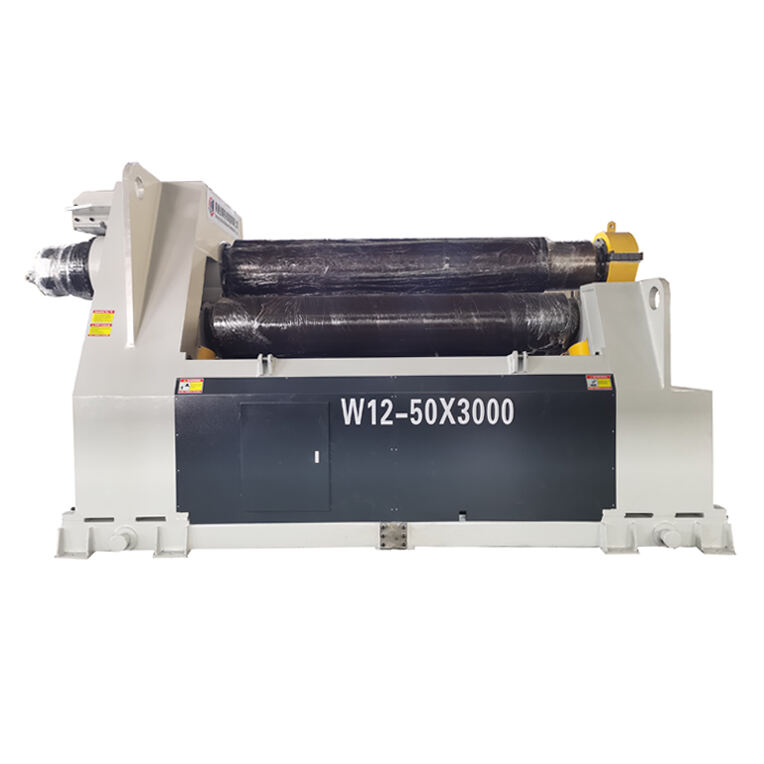
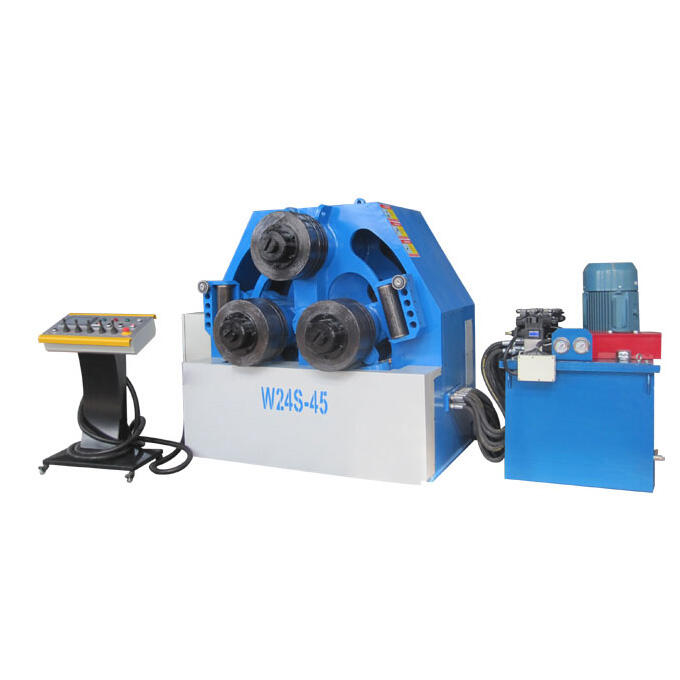
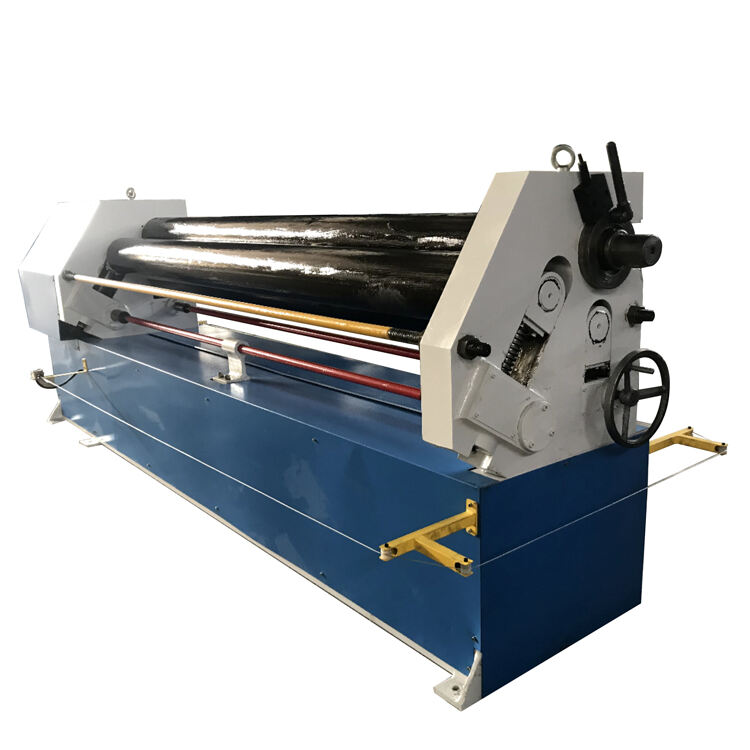
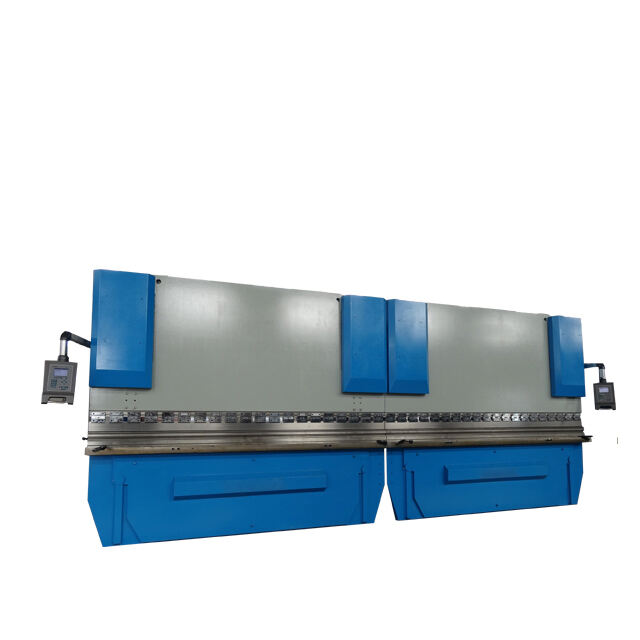
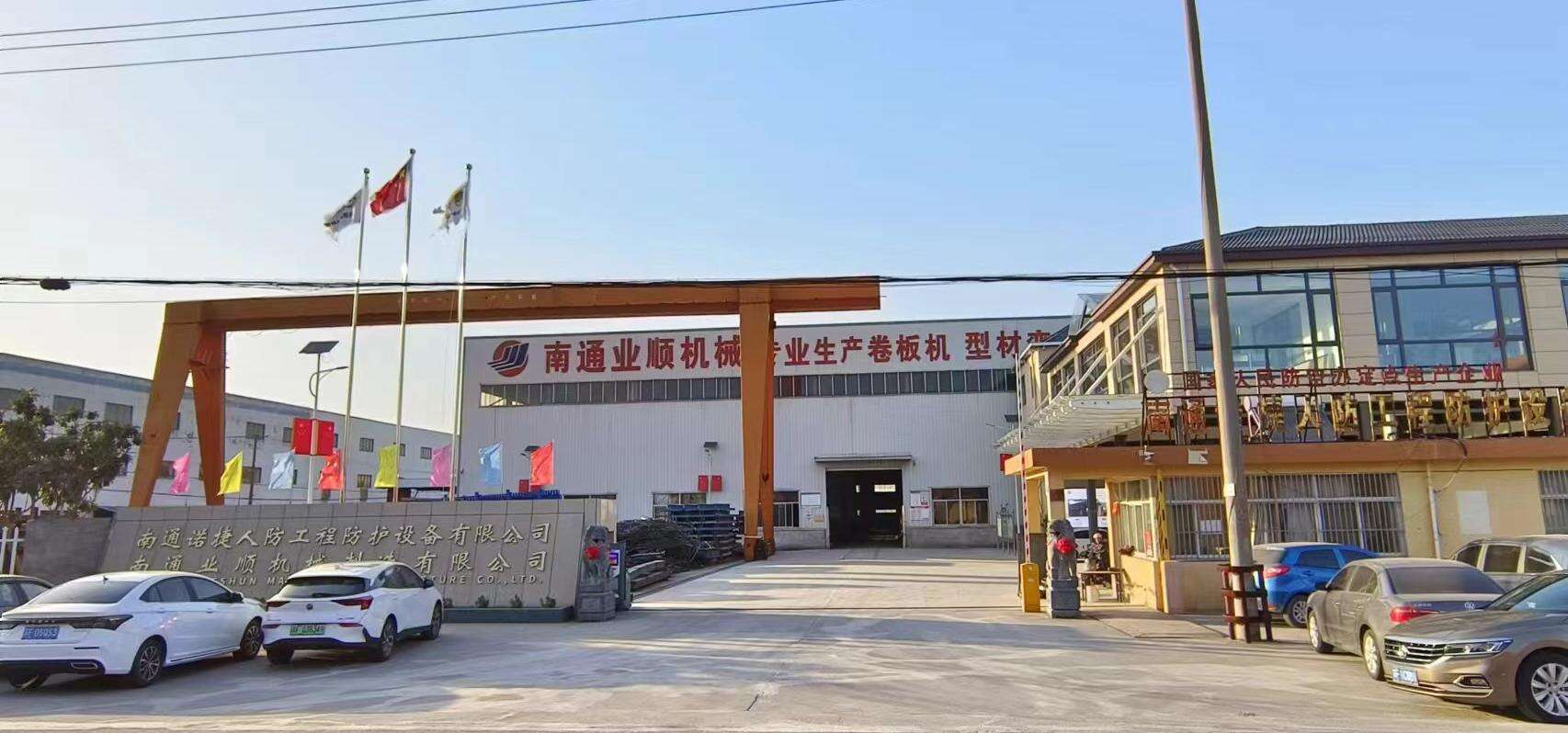
Nantong Yeshun Machinery’s automated CNC plate rolling machines are engineered for integration into unmanned workshops—facilities that rely on minimal human intervention to reduce labor costs, improve consistency, and operate 24/7 (common in high-tech manufacturing, automotive component production, and aerospace parts fabrication). These machines combine advanced CNC control with fully automated material handling and process monitoring systems, enabling them to perform the entire plate rolling cycle (loading, pre-bending, rolling, unloading, quality inspection) without operator oversight. Key automation features include: 1) an automated loading/unloading system (with robotic arms or roller conveyors) that transfers plates to/from the machine’s worktable; 2) a CNC system with pre-programmed rolling sequences (supporting 3D CAD file import) that automatically calculates roller positions, speeds, and pressure for different plate sizes and materials; 3) an in-line laser measurement system that checks the rolled part’s diameter/radius during processing (correcting deviations in real time); and 4) a fault detection system that sends alerts to a central control room if issues (e.g., material jam, roller wear) occur. A leading unmanned metal forming workshop in East China, specializing in automotive exhaust system components, provides a standout application example. The workshop uses two Yeshun W12-20×2000 automated CNC plate rolling machines to produce 10,000 stainless steel exhaust pipes monthly (each made from 2mm-thick, 1.2m-long 304 stainless steel plates rolled into 100mm-diameter cylinders). The machines operate in a fully unmanned cell: 1) a robotic arm retrieves a steel plate from an automated storage rack and loads it onto the machine’s worktable; 2) the CNC system imports the exhaust pipe’s CAD file, calculates the rolling parameters (pre-bending angle of 15°, roller speed of 5m/min, pressure of 80MPa), and starts the rolling process; 3) the laser measurement system checks the cylinder’s diameter after each roll, adjusting the roller position by ±0.1mm if needed to maintain a tolerance of ±0.2mm; 4) once rolling is complete, another robotic arm unloads the cylinder and transfers it to a downstream welding machine. This automation has allowed the workshop to operate 24 hours/day with only 2 supervisors per shift (vs. 4 operators per shift with manual machines) and has reduced the exhaust pipe’s defect rate from 3% to 0.5%. Another application involves an aerospace component manufacturer’s unmanned workshop using Yeshun’s W12-30×3000 automated CNC plate rolling machine to roll 5mm-thick titanium alloy plates into 300mm-diameter engine casings. The machine’s automated system includes a vacuum hold-down device (to prevent titanium deformation) and a nitrogen atmosphere enclosure (to protect the titanium from oxidation during rolling)—critical for aerospace material standards. The CNC system stores over 50 rolling programs for different casing sizes, and the in-line inspection system uses 3D scanning to verify the casing’s roundness (ensuring compliance with ASTM F2924 aerospace standards). Yeshun’s automated CNC plate rolling machines are compatible with industry 4.0 protocols (e.g., OPC UA), allowing them to connect to the workshop’s central MES system for production scheduling and data analysis. For customers building or upgrading to unmanned workshops, these machines offer the automation, precision, and reliability needed to optimize operations. Contact Yeshun Machinery to discuss your unmanned workshop’s layout, part specifications, and integration requirements, and our team will design a tailored automated rolling solution.
 EN
 AR
 CS
 FR
 DE
 PL
 PT
 RU
 ES
 TL
 ID
 UK
 VI
 TH
 FA
 MS