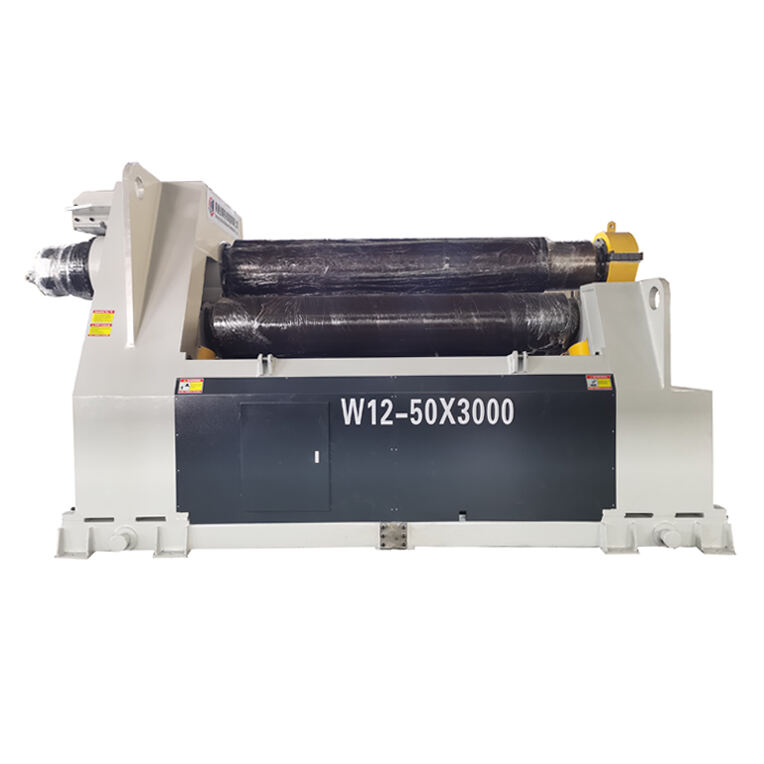
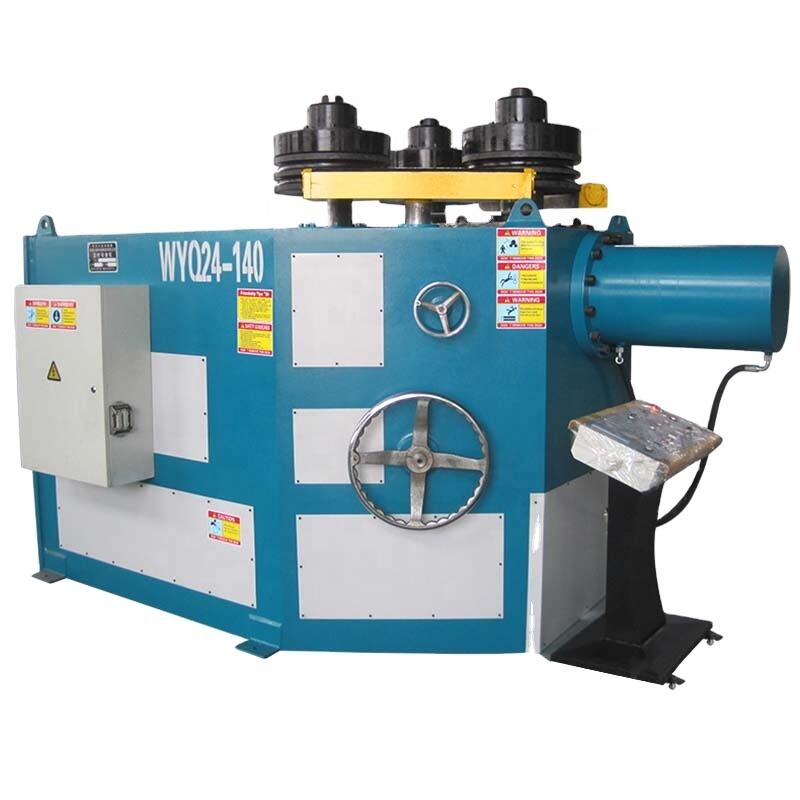
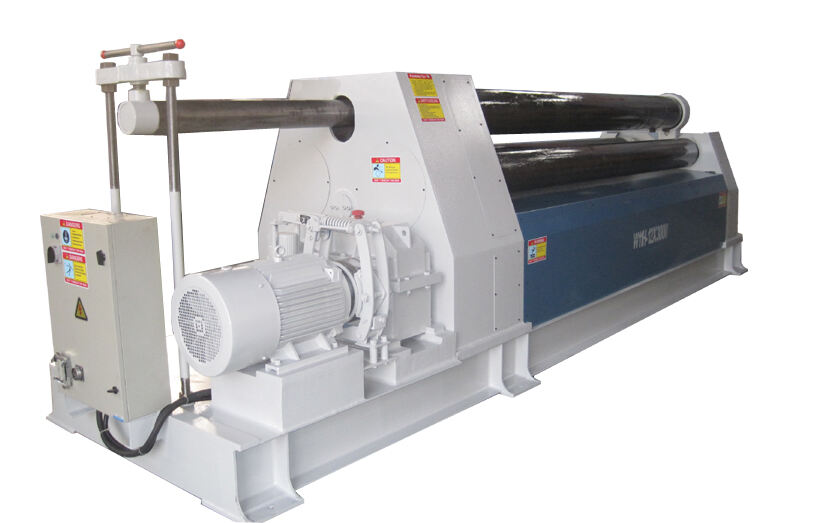
Nantong Yeshun Machinery’s CNC plate rolling machines with automation systems are engineered to be core components of smart factories—facilities that leverage digitalization, data integration, and automated workflows to optimize production, reduce waste, and improve decision-making. These machines feature advanced automation capabilities that integrate with smart factory ecosystems, including: 1) compatibility with industrial communication protocols (e.g., PROFINET, EtherNet/IP) for seamless data exchange with MES (Manufacturing Execution Systems), ERP (Enterprise Resource Planning) systems, and IoT platforms; 2) an integrated automation cell that includes automatic feeding, rolling, inspection, and sorting (all coordinated by a central PLC); 3) AI-powered process optimization that analyzes historical rolling data (e.g., material type, thickness, roller settings) to recommend optimal parameters for new parts; and 4) digital twin technology that creates a virtual copy of the machine and rolling process—allowing operators to simulate new rolling programs, test parameter changes, and troubleshoot issues without disrupting production. A smart metal forming factory in East China, which supplies components to the 新能源汽车 (new energy vehicle, NEV) industry, provides a comprehensive application example. The factory uses three Yeshun W12-25×3000 CNC plate rolling machines with automation systems to produce aluminum alloy (6061-T6) battery case cylinders (150mm diameter, 300mm length) for NEVs. The machines are integrated into the factory’s smart ecosystem: 1) the ERP system sends a daily production order (e.g., 5,000 battery cases) to the MES, which schedules the order across the three machines; 2) the MES sends the battery case’s CAD file and material specifications (2mm-thick 6061-T6 aluminum) to each machine’s CNC system; 3) the machine’s AI optimization tool analyzes past rolling data for 6061-T6 aluminum and recommends optimal parameters (roller speed 8m/min, pre-bending pressure 60MPa); 4) the automation cell’s robotic arm loads aluminum plates onto the machine, the CNC executes the rolling program, a laser scanner inspects the cylinder’s dimensions, and another robot sorts good/bad parts into separate bins; 5) real-time production data (e.g., number of cases produced, defect rate, energy use) is sent back to the MES for monitoring and reporting. This integration has reduced production lead time by 45% (from 5 days to 2.75 days), cut material waste by 12% (from 15% to 3%), and improved overall equipment efficiency (OEE) by 30% (from 60% to 90%). Another key feature of the automation system is digital twin technology. When the factory needs to produce a new battery case design (e.g., 180mm diameter), engineers use the digital twin to simulate the rolling process—testing different roller positions and speeds to identify potential issues (e.g., material thinning at the cylinder’s seam) before running the program on the physical machine. This has reduced the time to launch new products by 60% (from 2 weeks to 5 days) and eliminated the need for costly physical prototypes. Yeshun’s CNC plate rolling machines with automation systems are designed to support continuous improvement in smart factories, with data analytics tools that identify bottlenecks (e.g., “Machine 2 has a 10% higher defect rate due to roller wear”) and suggest solutions. For factories transitioning to smart manufacturing, these machines offer the integration, automation, and data capabilities needed to stay competitive. Contact Yeshun Machinery to discuss your smart factory’s digital infrastructure, production goals, and integration requirements, and our team will design a tailored CNC plate rolling solution.
 EN
 AR
 CS
 FR
 DE
 PL
 PT
 RU
 ES
 TL
 ID
 UK
 VI
 TH
 FA
 MS